
The fascinating story of Queen Elizabeth’s secret outreach to the Muslim world, which set England on the path to empire, by The New York Times bestselling author of A History of the World in Twelve Maps. [Pub. Viking. 352 pp.]
In a world where men have traditionally used women to further their own ambitions, Queen Elizabeth I—the last of the Tudor monarchs, Gloriana, and the Virgin Queen—has always been a compelling historical figure. But few know that besides ushering in the golden age of England, the woman once known solely as the daughter of King Henry VIII and his mistress-turned-queen Anne Boleyn conquered new frontiers to initiate trade between England and the Islamic world.
A beginning, from an end
The Sultan and the Queen begins with the end of the reign of Mary I of England—Elizabeth’s formidable sister who was known to English Protestants as “Bloody Mary” for the executions she ordered on behalf of Catholicism.
Though Mary I was deeply unpopular in life, her death left England in a precarious position as a small Protestant country in the midst of Catholic Europe—so it fell to the next queen to find allies.
Elizabeth I aimed high, far beyond England and the rest of the continent, by approaching the most important player on the world stage: the Ottoman sultan, whose empire stretched from Egypt to central Europe. And from there sprung forth an exchange of not only goods, but also assumptions, ideologies, and beliefs that shaped the world as we see it today.
The people’s mirror
Jerry Brotton, a historian and professor of Renaissance Studies at Queen Mary University of London, deftly wove together official documents, missives, and journal entries to show how Elizabeth I and her envoys leveraged their skills, trades, and Protestantism to form an alliance against a domineering Catholic Europe.
But I particularly loved it when Brotton went beyond politics and trade to unpick Elizabethan theater, showing how ordinary people understood the sweeping changes around them.
He even discussed at length how Christopher Marlowe and William Shakespeare revolutionized storytelling to turn previously one-dimensional Turks and Moor stereotypes into complex characters revealing uncomfortable truths, adding context to familiar stories and showing how fact and fiction intertwined.
A look into a dozen lives
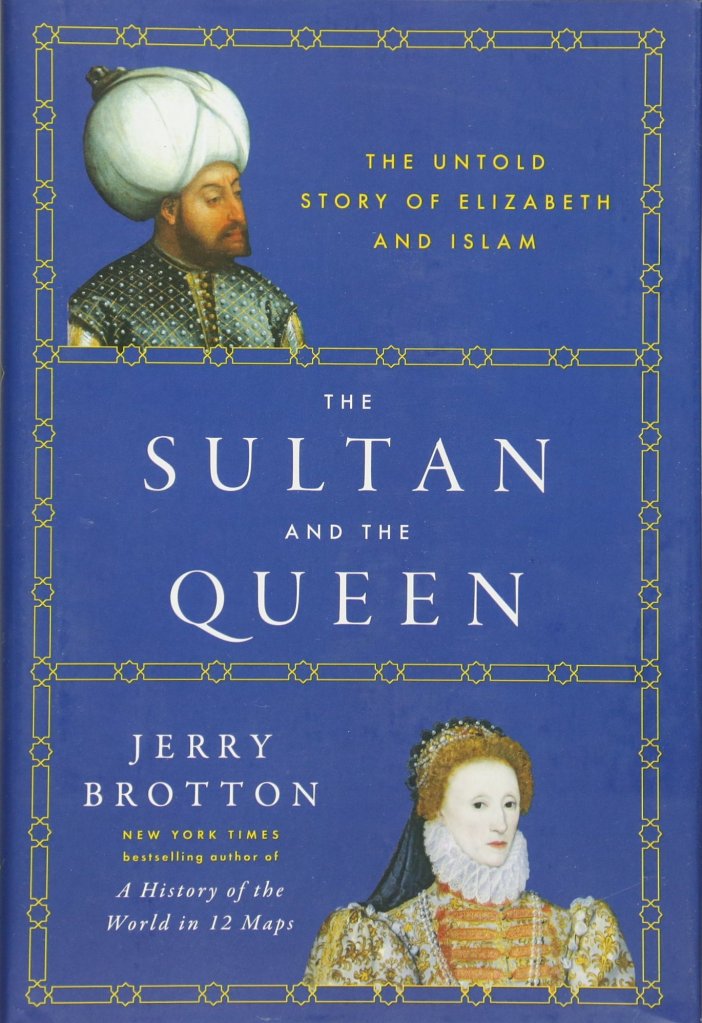
The Sultan and the Queen’s title might be misleading, because it isn’t the story of Elizabeth and any one person; the book focuses on Elizabeth as a queen, exploring her orders and how they were carried out across continents. Rather than Elizabeth’s personal life and speculations on her most intimate thoughts and relationships, Brotton puts Ottomans and Muslims of varying professions in the spotlight, revealing how they were seen by English diplomats, merchants, and everyone in between.
Though I enjoy historical nonfiction, I had more difficulty with The Sultan and the Queen because of the completely unfamiliar cast of characters and the faraway locales they visited on the orders of their queen. But Brotton does an admirable job of bringing them to life, with lush descriptions of people, cities, and even clothing, as well as asides that show both the opulence and brutality of the time period.
The Sultan and the Queen isn’t light reading, nor is it the type of book to read if you would simply like to Keep Up With The Tudors. But if you want to read specifically about the intricate, chaotic, and dangerous world they lived in, it’s perfect. ♦
Thoughts from the future
I enjoy reading nonfiction when I manage to get my hands on it, but politics and commerce aren’t my forte; in my review I focused more on the social and cultural aspects of Elizabeth’s relationships with the Islamic world, and how they affected England.
If you’d like to read other people’s thoughts on The Sultan and the Queen by Jerry Brotton, here are some reviews to get you started:
- “Having lost much of her previous access to Catholic commerce, Elizabeth found new connections in fellow Protestant lands as well as the Islamic world, notably the Ottoman Empire. […] Brotton successfully details the “unlikely” alliance through intriguing portrayals of England’s first ambassadors to Iran, Morocco, and the Ottoman Empire, noting the uneven growth of trade between the island nation and Muslim powers.” – Publishers Weekly
- “An intriguing look at England’s contact with the Ottoman Empire and its enormous influence on Elizabethan commerce and culture, especially the theater. […] An erudite work that presents a fresh facet to Elizabeth’s reign.” – Kirkus Reviews
Thank you to Fully Booked and Penguin Random House for the ARC!
This review has been edited for context and clarity. It was originally posted on Fully Booked Online in October 2017. Check out Fully Booked on Facebook, Instagram, and Twitter.

